A Morning Inside the Great Market Hall Before the Crowds
What Budapest's Great Market Hall is like at 6 AM, which vendors set up first, and why a weekday morning beats any Saturday. A local's walkthrough.
 By Gábor Kovács, Budapest local specialist and experience guide
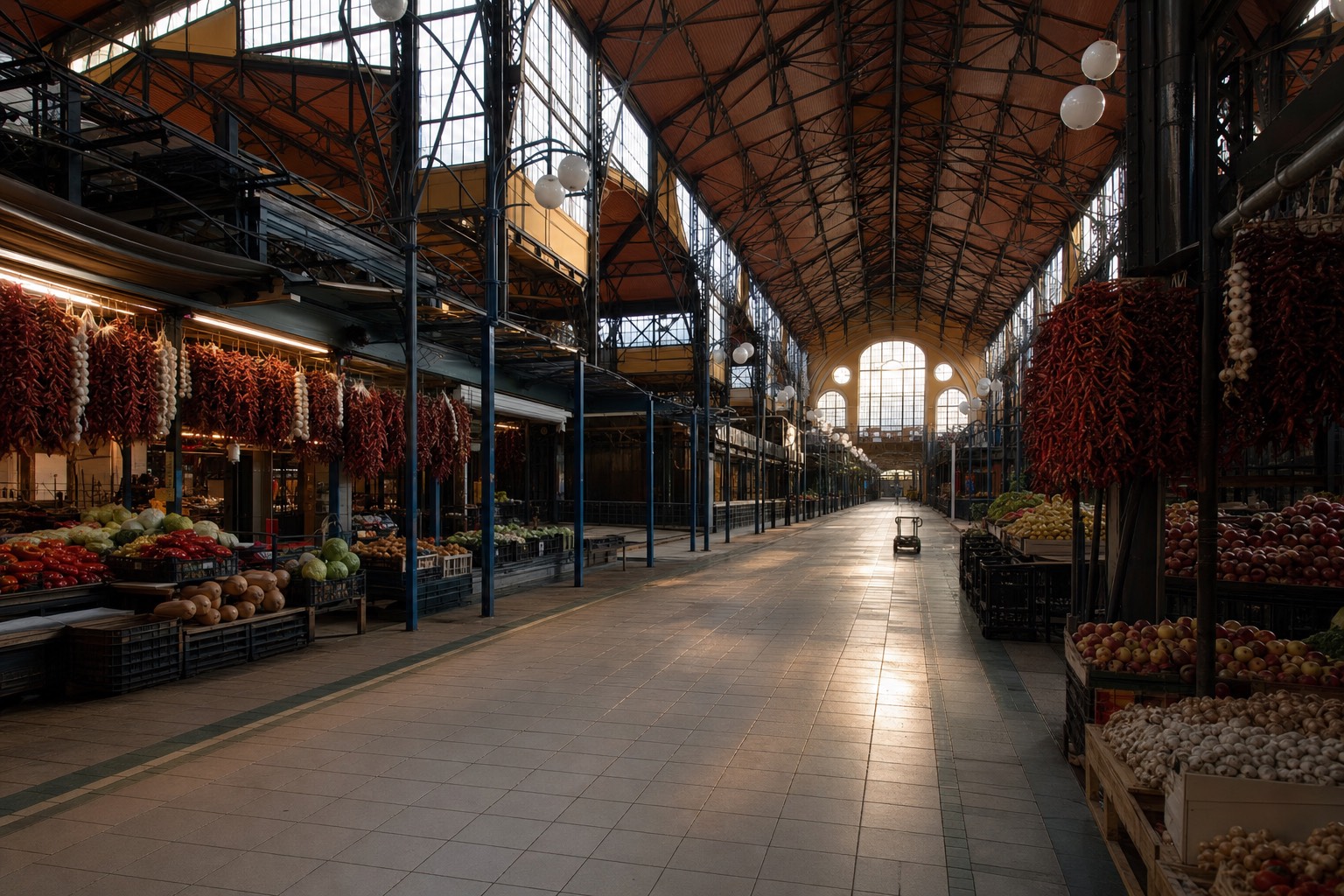
The Nagycsarnok (the Great Market Hall) smells different at half past six. Not the fried-food haze the afternoon crowd knows, but cold iron, wet stone, coffee from a vendor's thermos, and somewhere under it all, paprika. I have shopped here most Saturdays since I was tall enough to carry the bag, and the market I love is not the one most visitors meet. That one exists for about three hours a day, and then it politely disappears under a tide of phone cameras.
The early-morning stroll stays a free independent visit. For a guided experience later, Foodapest’s daytime option begins at the hall; its evening tour skips the market.
Booking choice: Foodapest combines traditional dishes, street-food tasters and wines in a three-hour guided walk. Explore Foodapest Market To Tavern
This piece is the walkthrough, the feel of the place before nine. If you want the structured version, opening hours, floor plan, what to eat stall by stall, that all lives in my Great Market Hall guide. Read this one for what it is actually like.
What Time Does The Great Market Hall Open In The Morning?
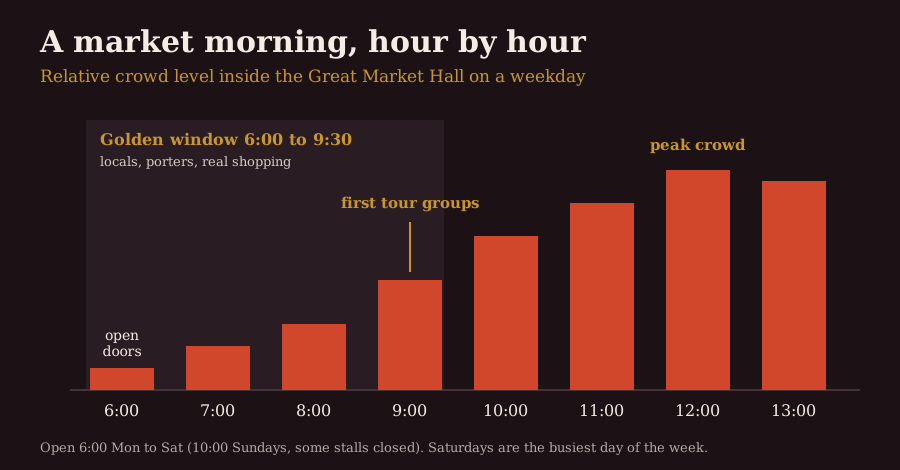
The Great Market Hall opens at 6:00 AM Monday through Saturday, per the official market operator. Sunday is the odd one out with a 10:00 AM start and many stalls staying shuttered. The earliest hours belong to locals, restaurant buyers, and porters, not tourists, which is exactly why they are worth getting up for.
Six o'clock sounds brutal on holiday, I know. You do not need to be on the doorstep at opening. But there is a real difference between the hall at 7:30 and the hall at 11:00, and it is not subtle. The official schedule is published by the market operator, Piaconline, and it has held steady: doors at six, six days a week.
The trick is that most of the city's visitors are still at breakfast until nine or ten. Hostel kitchens are only starting to clatter. So for those first hours the market runs the way it has run since 1897, as a working food hall for people who cook.
Which Vendors Set Up First?
The butchers and produce sellers are working before the doors open, trimming, stacking, and icing their counters. The basement fishmongers and pickle stalls follow close behind. The upstairs lángos and souvenir stands wake last, often not fully going until mid-morning, because their customers are tourists who arrive late.
Walk in at opening and the ground floor is already alive. Butchers have been at it in the back since before dawn; by six their counters are dressed, sausage loops hung, the kolbász (Hungarian paprika sausage) laid out in rust-red rows. The produce families are unstacking crates that arrived overnight, and this is when the fruit looks its best, unhandled, still cold from the truck.
Down the stairs, the fish counters are icing trays and the savanyúság stalls, the pickle vendors, are lifting lids off barrels of fermented cabbage and whole pickled peppers. The smell down there at 6:30 is sharp enough to wake you better than coffee.
Upstairs is a different story. The gallery, where the lángos windows and embroidery stands live, is mostly dark until nine-ish. Nobody fries dough for an empty balcony. If your main goal is the famous fried bread, you actually should not come at dawn; I wrote about that whole obsession in the lángos story.
The building wakes floor by floor, bottom to top:
| Floor | What lives there | When it wakes |
|---|---|---|
| Basement | Fishmongers, pickle barrels, a small supermarket | From opening, fully going by 6:30 |
| Ground floor | Butchers, produce, paprika and spice stalls, bakeries | Dressed and trading at 6:00 |
| Gallery (upstairs) | Lángos and hot-food windows, textiles, souvenirs | Slowly from 9:00, full swing by 10:30 |
Here is roughly how a weekday morning unfolds, from years of standing in it:
| Time | What is happening on the floor |
|---|---|
| 6:00 | Doors open. Butchers and produce stalls fully dressed, aisles nearly empty |
| 6:30 | Basement fish and pickle counters running. Restaurant buyers with trolleys |
| 7:30 | Neighborhood regulars arrive, string bags and short, fast transactions |
| 9:00 | First tour groups at the Fővám tér entrance. Upstairs stalls opening |
| 10:30 | Lángos queue forming on the gallery. Aisles slow to a shuffle |
| 12:00 | Peak crowd. The morning market is gone until tomorrow |
What Does The Hall Feel Like At Seven In The Morning?
Quiet enough to hear the building. Trolley wheels on tile, knives on steel, vendors calling across empty aisles in Hungarian, and the light coming in low through the high windows. It is the only time of day you can stand in the central aisle and see the full length of the hall.
The Nagycsarnok is a genuinely great piece of architecture, a steel cathedral with a Zsolnay-tiled roof, and at seven you can actually see it. Stand in the middle of the central aisle and look up. By noon you will not be able to do this without being bumped by a walking tour.
The soundtrack is my favorite part. There is a specific rhythm to a market that is working rather than performing: short greetings, prices called out once, the thud of a crate. Vendors have time to talk at this hour. Ask the paprika seller the difference between édesnemes and csípős (the noble-sweet and hot grades) and you will get a real answer, sometimes a taste on the back of your hand. Ask at noon and you will get a shrug toward the price sign, which is fair, because there are forty people behind you.
Is A Weekday Morning Better Than Saturday?
Yes, clearly. Saturdays are the market's busiest day, packing local weekly shoppers and tourists into the same aisles from mid-morning. A Tuesday or Wednesday before 9:00 gives you the same stalls with a fraction of the bodies. If Saturday is your only option, come right at opening and be done by ten.
I still go on Saturdays, out of habit and because that is when my family always went. But I go at seven. Guides who cover the market agree on this point; Airial's Great Market Hall guide flags weekends, Saturdays especially, as the crush to avoid, and the advice repeated by locals is to arrive before nine on a weekday to catch vendors at their freshest. One Budapest market writer put the golden window well: roughly 6:00 to 9:30, when porters still outnumber phones.
| Weekday morning | Saturday | |
|---|---|---|
| Crowd before 9:00 | Thin, mostly locals | Building fast from 8:30 |
| Vendor time to chat | Plenty | Almost none after 9 |
| Produce selection | Freshest, just unpacked | Good early, picked over by noon |
| Upstairs food stalls | Slow to open | All going by 10, long queues |
| Best arrival | 7:00 to 8:30 | 6:30, leave by 10 |
Sunday barely counts. The hall opens at ten and a good share of stalls take the day off, so you get the building without the market.
What Should You Actually Eat That Early?
Breakfast at the market is a butcher-counter affair: warm sausage with mustard and a slice of bread, a kifli (crescent roll) from the bakery stand, fruit bought by the piece. The famous hot foods upstairs come later. Think of dawn as the shopping-and-grazing shift, not the feasting shift.
My standard order has not changed in twenty years: a hot debreceni sausage at the butcher's stand-up counter, sharp mustard, white bread to mop up. Under a thousand forints and better than most hotel breakfasts in town. Add an apricot or a handful of cherries from the produce aisle in summer.
What you cannot get at 6:30 is the gallery food, the lángos and stuffed cabbage aimed at visitors. If your list is longer than breakfast, the market is stop one on a longer eating day; my what to eat in Budapest guide maps the rest of it.
When Do The Crowds Actually Arrive?
In waves, starting around 9:00 when the first walking tours hit the Fővám tér entrance. By 10:30 the central aisle is slow, by noon it is shoulder to shoulder, and the character of the hall flips from grocery to attraction. The change takes less than an hour once it starts.
You can almost set a clock by it. The first wave is small groups with a guide holding a flag. Then the river-cruise passengers, then everyone who read "visit the Great Market Hall" in the same three articles. None of this is a complaint, I make part of my living from people loving this city, but it is a fact about timing.
How Do Locals Shop The Market Differently?
Fast, loyal, and vertical. Locals buy from the same three or four stalls every week, greet the vendor by name, and are in and out in twenty minutes. They use the basement for pickles and fish, the ground floor for everything else, and mostly ignore the gallery. Copy the loyalty part: pick one stall and go back.
The single most local thing you can do is return. Buy cherries from the same woman on Tuesday and Friday and by the second visit she remembers you, and the cherries get better. Markets run on relationships; that is the entire secret, here and at every csarnok (market hall) in the city.
The other habit worth stealing: buy something you cannot pronounce. A bag of dried pepper, a jar of cloudy pickle brine, a sausage the butcher points at when you ask what he takes home. Street-level eating in this city rewards small gambles, which is more or less the thesis of my street food guide too.
Come at seven once. Stand in the aisle, buy a warm sausage, listen to the trolleys. You will understand the building in a way no afternoon visit can teach you.
Choose Your Budapest Experience
Foodapest Market To Tavern. Traditional dishes, street-food tasters and wines with an English-speaking local guide. Have a date in mind? Check it before arranging the rest of your Budapest day.
180 minutes. Daytime option visits the market; the 17:00 option skips it. Notify the operator about vegetarian or vegan substitutions. Not suitable for coeliac requirements.
Choose a date to see scheduled departures. Final availability and price are confirmed on Viator.
No verified experience fits those requirements. Adjust your choices, or keep the independent plan described above.
Compare Options And Fit Your Plans
General recommendations until you choose. Sightseeing cruises use recorded commentary; the dinner cruise has no guide. All selected activities meet in central Pest; use the operator confirmation for the exact point and option.
- Hungarian Cooking In A Local Home: 240 minutes. Prepare a Hungarian main course and dessert with a local chef; ingredients, equipment and a recipe booklet are included. Select the morning market option for the market visit; the evening option starts at the apartment. The operator cannot accommodate coeliac disease.
- Budapest Culinary And Wine Walk: 300 minutes. Explore food markets and neighbourhoods with an English-speaking food specialist, tasting Hungarian dishes and wines along the way. Allow five hours and substantial walking. Current option is private; private transport and gratuities are excluded. Dietary arrangements require confirmation.