Buying Paprika Like You Mean It
A Budapest local on buying real Hungarian paprika, the eight grades from Különleges to Erős, Szeged and Kalocsa, and where locals shop instead of the airport.
 By Gábor Kovács, Budapest local specialist and experience guide
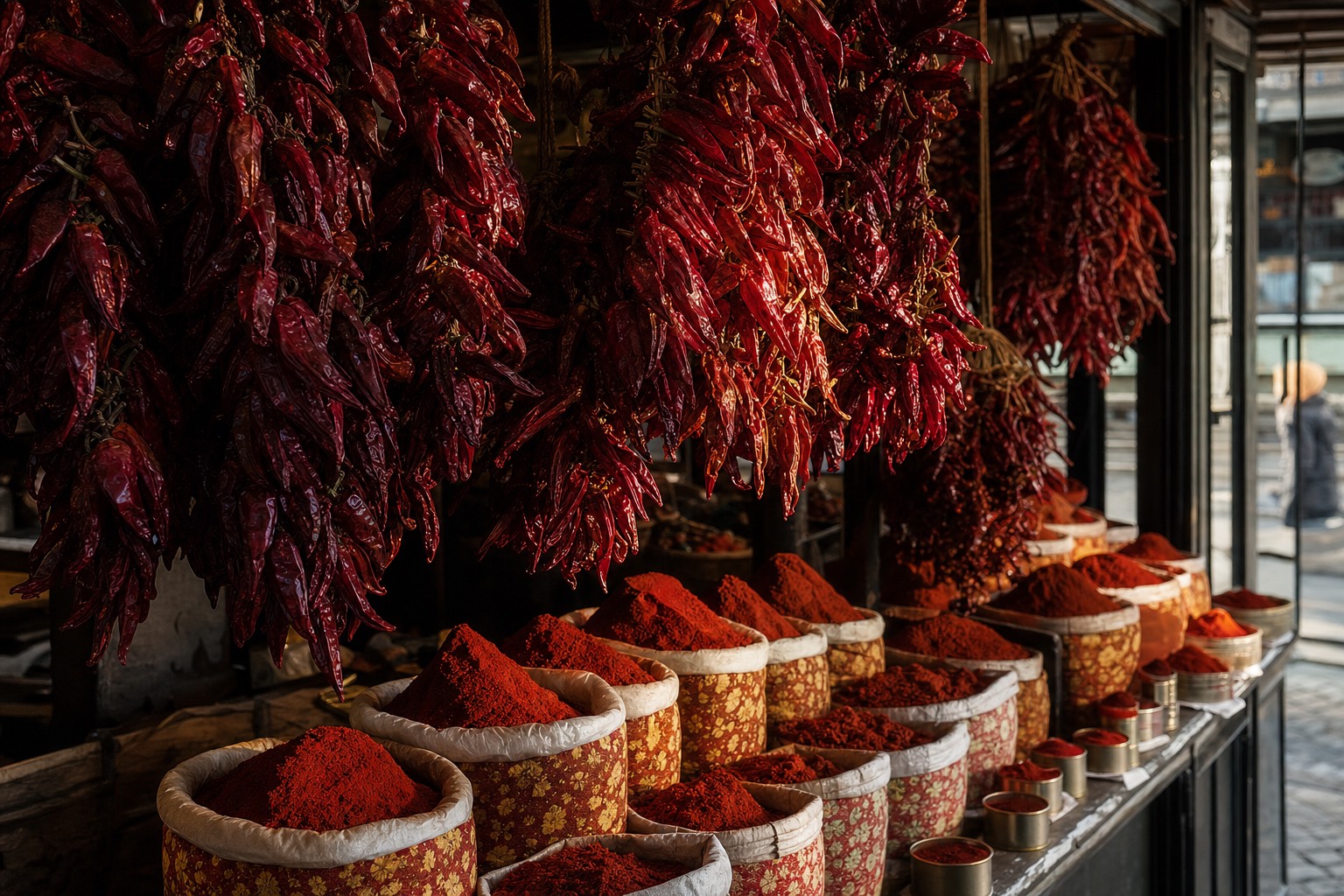
My mother keeps her paprika in a tin with a dented lid that predates me, refilled from a plain clear bag she buys at the market. She would no more cook from a souvenir-shop sachet than she would salt the soup with sand. Paprika is not a souvenir in Hungary; it is the national pantry's foundation, and buying it properly is a small skill. Visitors leave with the pretty tin from the airport. Locals leave the market with a bag that costs less and cooks better. Here is how to shop like the second group.
Want to turn the paprika lesson into dinner? The local-home cooking class includes ingredients, equipment and recipes to take home.
Booking choice: The four-hour local-home class includes ingredients, equipment and recipes, with a market visit in the morning option. Explore Hungarian Cooking In A Local Home
Why Is Hungarian Paprika Different?
Because of where and how it grows. The Szeged and Kalocsa regions in southern Hungary get the country's highest count of sunny hours, the peppers ripen to full sweetness by the September harvest, and the traditional craft of stringing and drying them runs back generations. Both regions' ground paprika carry EU protected designation of origin status.
Drive through the villages around Kalocsa in early autumn and you still see it: garlands of scarlet peppers drying in strings hung from fences and porch beams, the way Budapest By Locals' paprika guide describes and the way my grandmother's village did it. The sun does the first half of the work. The mills do the rest.
The history has real inventors in it, which surprises people. Kalocsa growers Ferenc Horváth and Jenő Obermayer cross-bred the world's first non-pungent sweet pepper variety, and in Szeged the Pálfy brothers worked out an efficient way in the mid-1800s to strip veins and seeds, the hot parts, so sweet paprika could be produced at scale. Hungarian sweet paprika is not found nature; it is engineered agriculture with a 150-year patent history, and the "Szegedi" and "Kalocsai" names on a label are protected designations, not decoration.
What Do The Eight Grades Actually Mean?
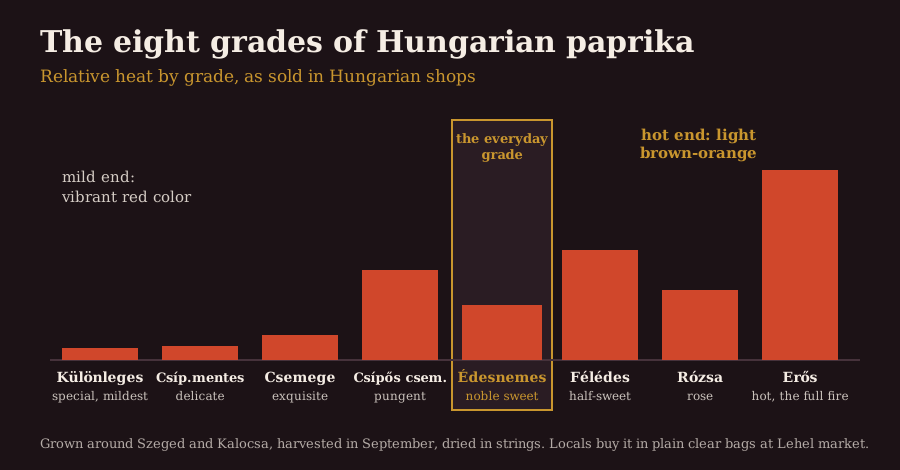
Hungarian shops sell exactly eight grades of paprika powder, running from Különleges, the mildest and most vibrantly red, through the everyday standard Édesnemes, to Erős, the hottest, with a light brown-orange color. The grade names describe both heat and color, and the label word matters more than the packaging.
This is the table to photograph and carry:
| Grade | Hungarian | Heat | Color |
|---|---|---|---|
| Special quality | Különleges | Mildest of all | Vibrant deep red |
| Delicate | Csípősmentes csemege | None | Rich red |
| Exquisite delicate | Csemege | Very mild | Red |
| Pungent exquisite | Csípős csemege | Noticeable | Red |
| Noble sweet | Édesnemes | Slight bite | Bright red |
| Half-sweet | Félédes | Medium | Red |
| Rose | Rózsa | Mild | Light red |
| Hot | Erős | The full fire | Light brown-orange |
Édesnemes, noble sweet, is the workhorse. It is what most Hungarian kitchens mean when a recipe just says "paprika", and its slight pungency is why goulash made abroad with generic supermarket powder tastes flat. If you buy one bag, buy this one. If you buy two, add Erős and treat it with respect; that pale orange color hides real heat.
The full grade breakdown, with the Hungarian names, comes from the same local source linked above, and it matches every market stall sign I have ever squinted at.
Should You Buy Sweet Or Hot?
Buy sweet as your base and hot as your seasoning. Hungarian cooking builds on quantities of sweet paprika, spoonfuls at a time, while hot paprika arrives in pinches at the table. A sensible haul is two bags of Édesnemes for cooking and one small Erős for courage.
Understand the roles and the choice makes itself. Sweet paprika is a bulk ingredient here, closer to flour than to chili powder. It goes into the pot by the heaped spoon, toasted briefly in fat off the heat so it blooms without burning. That technique, incidentally, is half of what separates a real gulyás from tourist-menu soup; my goulash guide walks through the rest.
Hot paprika is personal. In many households it lives at the table, not the stove, so each eater sets their own fire. Which brings us to the pastes.
What About Erős Pista And The Paprika Pastes?
The pastes are the fresh-pepper counterpart to the powders: Erős Pista is the rough, salty, hot one, Édes Anna the sweet sister, and Piros Arany, Red Gold, comes in toothpaste-style tubes. Every Hungarian fridge has at least one, and a jar makes a better gift than most tins.
Erős Pista translates as "Strong Steve", which tells you the register these products live in. It is crushed hot peppers and salt, nothing clever, spooned into soups and onto fried things by people who mean it. Édes Anna ("Sweet Anna") does the same job without the burn, and Piros Arany squeezes from a tube straight onto bread if nobody is watching.
| Paste | Character | Form | Use it on |
|---|---|---|---|
| Erős Pista | Hot, coarse, salty | Small jar or bottle | Soups, stews, eggs, anything timid |
| Édes Anna | Sweet, mild | Small jar or bottle | Same jobs, no burn |
| Piros Arany | Smooth, sweet or hot versions | Tube | Bread, sandwiches, camping cookery |
As gifts they beat powder on one practical axis: a sealed jar survives a suitcase better than a paper sachet, and the names alone earn a laugh when you explain them.
Where Do Locals Actually Buy Paprika?
At neighborhood market halls, and the standing local answer is Lehel Csarnok at Lehel tér on the M3 metro, where several shops and table vendors sell good powder in plain clear bags rather than tourist packaging. The Great Market Hall works too if you shop the aisles, not the souvenir wall.
The clear bag is the tell. Local-facing vendors sell paprika the way they sell flour, weighed and bagged, because their customers cook with it weekly and judge it by color and smell, not by the embroidery pattern printed on a gift box. The Lehel tip is the consistent answer locals give when asked where to buy, down to the advice to skip fancy packaging entirely, as one long-running Budapest travel community thread spells out.
Lehel is also simply a good morning: a working-class market in a gloriously odd building, ten minutes from downtown, with almost no tourists. Pair it with the fancier hall by the river, which I covered stall by stall in my Great Market Hall guide, and you will have seen both faces of Budapest food shopping. For the freshest possible reference point, the market's district operator even publishes indicative price lists; the May 2025 sheet had fresh paprika and chili starting around 500 forints a bunch at Lehel's tables.
How the buying options stack up:
| Where | Packaging | Company at the counter | Verdict |
|---|---|---|---|
| Lehel Csarnok, Lehel tér (M3) | Plain clear bags, weighed | Locals doing weekly shopping | The local answer |
| Great Market Hall aisles | Bags and simple tins | Mixed locals and visitors | Good, shop the food stalls not the souvenir wall |
| Supermarkets | Branded sachets and tins | Everyone | Fine for Édesnemes basics |
| Airport and souvenir streets | Embroidered pouches, gift boxes | Departing tourists | The markup wears a ribbon |
Tins Or Sachets: Which Should Travel Home?
Tins for keeping, sachets for cooking soon. Paprika's enemies are light, air and time, so a sealed metal tin protects flavor for months while a paper sachet fades faster. The local compromise: buy the powder loose or in clear bags, then decant into a tin at home, which is exactly what Hungarian kitchens do.
Nobody in my family has ever thrown away a paprika tin. They get refilled from market bags for decades, which is the system I recommend: buy one decent tin, anywhere, once, and treat every future clear bag as a refill. If you cook rarely, buy small. A bag opened eighteen months ago is a spice-shaped memory.
Storage rules, briefly: cupboard not counter, away from the stove's heat, lid on tight. Red on the shelf fades to brick, and the flavor fades with it.
How Do You Avoid The Airport Markup?
Buy before you fly. Airport and souvenir-street paprika sells the packaging, not the powder, at a multiple of market price, and often in smaller quantities. Fifteen minutes at Lehel or in the market hall aisles gets you better paprika, honestly weighed, with change left for a lángos on the way out.
The souvenir economy is not evil, just expensive. The embroidered pouch at the departure gate contains powder that started life in the same southern fields; you are paying for the last hundred meters of its journey. Do the shopping in town, where the same forints buy weight instead of ribbon.
One last local habit to steal: smell before you buy. Real fresh paprika has a sweet, almost fruity nose, nothing dusty about it. A vendor at a proper market will open the bag without being asked twice. That small transaction, a stranger holding out a bag of red powder so you can put your nose in it, is Budapest food culture in one gesture. It belongs on any list of things to do here before the bigger eating itinerary takes over, and long after the morning market rituals have become your own.
Choose Your Budapest Experience
Hungarian Cooking In A Local Home. Prepare a Hungarian main course and dessert with a local chef; ingredients, equipment and a recipe booklet are included. Have a date in mind? Check it before arranging the rest of your Budapest day.
240 minutes. Select the morning market option for the market visit; the evening option starts at the apartment. The operator cannot accommodate coeliac disease.
Choose a date to see scheduled departures. Final availability and price are confirmed on Viator.
No verified experience fits those requirements. Adjust your choices, or keep the independent plan described above.
Compare Options And Fit Your Plans
General recommendations until you choose. Sightseeing cruises use recorded commentary; the dinner cruise has no guide. All selected activities meet in central Pest; use the operator confirmation for the exact point and option.
- Goulash Cooking At Chefparade: 180 minutes. Make goulash soup, a paprika main and apple strudel in a hands-on three-course cooking class. Age 6+. Studio address is confirmed as Páva utca 13 or Bécsi út 27. Vegetarian menu on request; confirm the menu and dietary requirements before booking.
- Foodapest Market To Tavern: 180 minutes. Traditional dishes, street-food tasters and wines with an English-speaking local guide. Daytime option visits the market; the 17:00 option skips it. Notify the operator about vegetarian or vegan substitutions. Not suitable for coeliac requirements.